

 See My Latest Article on HelloNation

Electrical code violations are often hidden behind walls, inside panels, or beneath older repairs. In Knoxville, TN, many problems appear when a home is remodeled, an electrical permit is reviewed, or an inspector examines work that was added over time.
The National Electrical Code provides the technical baseline, while local requirements and permit rules determine how electrical work is approved. Code requirements can also depend on when the work was installed. An older installation is not automatically a violation simply because newer homes must meet updated standards, but unsafe alterations and defective equipment still need attention.
What electrical code violations are most common in homes?
The most frequent problems involve missing protection devices, improper wiring, overloaded circuits, unsecured cables, and unpermitted alterations. Some are easy to see, while others require testing or removal of a cover plate.
Common examples include:
- Missing ground-fault circuit-interrupter protection near water
- Missing arc-fault protection in required living areas
- Ungrounded or improperly grounded receptacles
- Loose connections and exposed conductors
- Overcrowded electrical boxes
- Circuit breakers that do not match the wire size
- Extension cords used as permanent wiring
- Electrical panels with poor labeling or inadequate working clearance
- Outdoor wiring that is not protected from moisture
- Receptacles installed too close to bathtubs or showers
These conditions can increase the risk of electric shock, overheating, arcing, or fire.
Why are GFCI outlets required in kitchens, bathrooms, and outdoor areas?
GFCI protection is intended to shut off power quickly when electricity begins flowing through an unintended path, such as a person standing on a damp floor. It is generally required for receptacles and certain equipment in locations where water or moisture is likely.
Typical locations include:
- Bathrooms
- Kitchen countertop areas
- Garages and unfinished accessory spaces
- Outdoor receptacles
- Laundry and utility areas
- Crawl spaces or unfinished basements where applicable
- Areas near sinks, wet bars, and similar fixtures
A common mistake is assuming that a GFCI receptacle must be installed at every protected location. One GFCI device may protect downstream receptacles if the wiring is connected correctly and the protected outlets are identified. A button that does not reset, a receptacle that repeatedly trips, or a device that has no power may indicate a wiring fault rather than a simple inconvenience.
What is the difference between GFCI and AFCI protection?
GFCI protection helps protect people from shock. Arc-fault circuit-interrupter protection, or AFCI protection, is designed to detect dangerous arcing that can occur in damaged, loose, pinched, or deteriorated wiring.
AFCI requirements commonly apply to circuits serving areas such as bedrooms, living rooms, hallways, dining areas, closets, and other dwelling spaces specified by the adopted code. Requirements may differ for older homes, replacement devices, and remodeling projects.
A breaker that trips after a renovation may be revealing a real problem, including:
- A damaged cable
- A loose neutral connection
- A shared neutral wired incorrectly
- A device that is incompatible with the protective breaker
- A nail, screw, or staple that has damaged concealed wiring
Replacing the breaker with a standard breaker without finding the cause can remove the protection without correcting the hazard.
Why are three-prong outlets sometimes unsafe?
A three-slot receptacle does not always mean the circuit is properly grounded. In older homes, a three-prong outlet may have been installed on a two-wire circuit, or the grounding connection may be loose, missing, or improperly connected.
An ungrounded receptacle can create a serious misconception: plugging in a device with a three-prong cord does not guarantee that the equipment is safely grounded.
Possible warning signs include:
- A tester shows an open ground
- A metal appliance gives a mild shock or tingling sensation
- A two-prong outlet was replaced without updating the wiring
- The receptacle is loose inside the electrical box
- A grounding wire is connected to a water pipe or other unsuitable path
Some existing ungrounded circuits may be addressed through approved protective devices and labeling, but the correct solution depends on the circuit, wiring method, and applicable code provisions.
What wiring mistakes commonly lead to code violations?
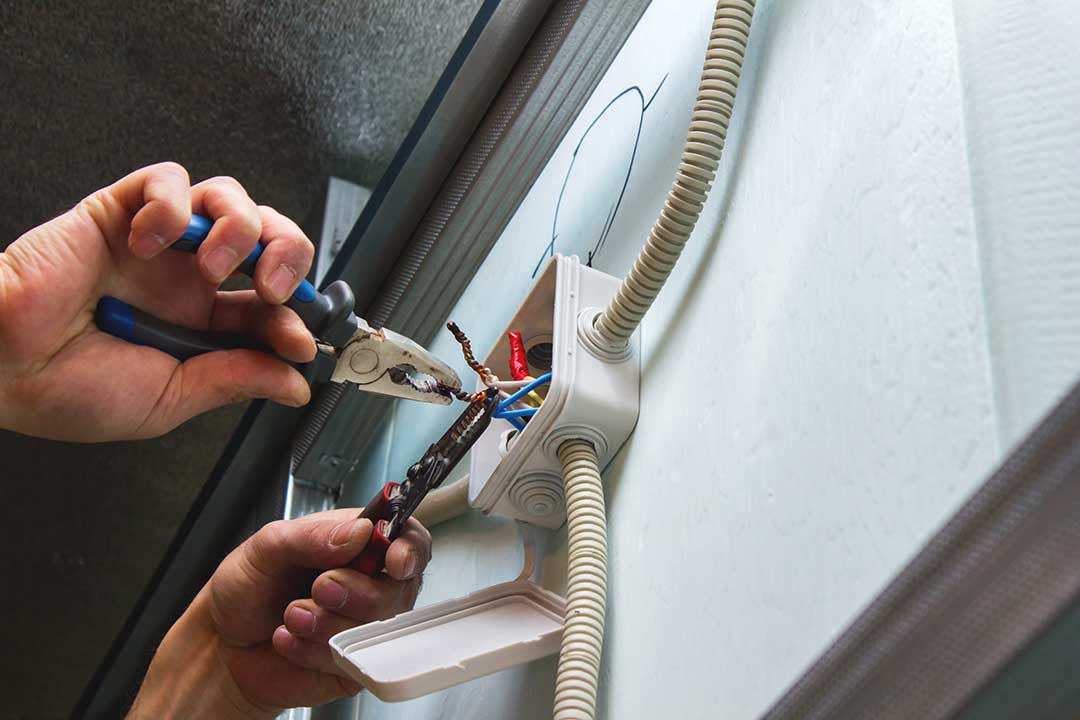
Many electrical problems result from do-it-yourself alterations or repairs that were made without considering the entire circuit. The most common wiring errors include connecting wires outside an approved electrical box, using wire connectors that are too small, reversing hot and neutral conductors, and leaving too little conductor length for safe connections.
Electrical boxes must generally remain accessible and cannot be buried behind drywall, paneling, cabinets, or permanent finishes. Cables also need proper support and protection from screws, nails, sharp edges, heat, and physical damage.
Another frequent issue is placing too many wires or devices in a box. Overcrowding can damage insulation, loosen connections, and make future maintenance unsafe. Junction boxes must have enough volume for the conductors, clamps, grounding wires, and devices installed inside.
Why do breaker size and wire size need to match?
A circuit breaker protects the wiring, not just the appliance. If a breaker is oversized for the wire, the conductor may overheat before the breaker trips.
For example, installing a larger breaker to stop nuisance tripping can create a dangerous condition if the existing cable was not designed for the higher current. Repeated tripping may instead point to excessive load, a failing appliance, damaged wiring, or an undersized circuit.
Large appliances such as electric water heaters, ranges, heat pumps, clothes dryers, and electric vehicle charging equipment often require dedicated circuits and specific conductor sizes. Their installation may also require load calculations, disconnecting means, or other equipment-specific protections.
What outdoor electrical violations are easy to overlook?
Knoxville households experience heavy rain, humidity, freezing temperatures, and seasonal storms. Outdoor electrical equipment must be selected and installed for the conditions where it is used.
Common outdoor problems include:
- Indoor-rated extension cords used outdoors
- Missing weather-resistant receptacles
- Covers that do not protect outlets while cords are plugged in
- Damaged underground wiring
- Outdoor cables installed without proper burial depth or protection
- Light fixtures not rated for damp or wet locations
- Receptacles lacking required GFCI protection
- Temporary wiring left in place as a permanent installation
Moisture can enter through cracked covers, loose fittings, deteriorated insulation, and poorly sealed boxes. Outdoor receptacles should not be treated as interchangeable with indoor devices.
Are electrical permits required for home alterations?
In Knoxville, electrical work generally requires the appropriate permit unless a specific exemption applies. Permit requirements can apply to installing, altering, repairing, replacing, or extending electrical systems after utility connection.
Permit history matters when a home has undergone a panel replacement, room addition, finished basement project, new high-load appliance installation, or major rewiring. Unpermitted work may create problems during inspection, insurance review, resale, or later remodeling.
Homeowners should also understand that code compliance is not always based solely on what is visible. Inspectors may need access to panels, junction boxes, crawl spaces, unfinished walls, and other parts of the electrical system.
Which electrical conditions require immediate attention?
Some conditions should not wait for a planned renovation. Turn off the affected circuit, if it can be done safely, when there is smoke, burning odor, crackling, visible arcing, melted insulation, water inside electrical equipment, or repeated breaker tripping.
Do not remove a panel cover, work near energized conductors, or investigate suspected service damage without appropriate training. Electrical service equipment can remain energized even when the main breaker is switched off.
A code-compliant installation should also be usable and maintainable. Panels need clear working space, circuits should be labeled accurately, receptacles should be firmly mounted, and protective devices should be tested according to their instructions. These details help identify hazards before a minor wiring defect becomes a shock or fire event.