

 See My Latest Article on HelloNation

LED bulbs use less electricity, last longer, and produce less heat than traditional incandescent bulbs. Choosing the right one, however, involves more than selecting the highest lumen rating. The bulb’s brightness, color, shape, dimming capability, fixture, and electrical conditions all affect whether it works well in a particular room.
How bright should an LED bulb be?
Choose an LED by lumens rather than watts. Lumens measure the amount of visible light, while watts measure electricity use.
Approximate replacements for common incandescent bulbs include:
- 450 lumens: similar to a 40-watt incandescent bulb
- 800 lumens: similar to a 60-watt incandescent bulb
- 1,100 lumens: similar to a 75-watt incandescent bulb
- 1,600 lumens: similar to a 100-watt incandescent bulb
These comparisons are estimates, but they provide a useful starting point. A bedroom lamp may work well with about 450 to 800 lumens, while a kitchen ceiling fixture may need several bulbs totaling 2,000 lumens or more.
Room size, ceiling height, wall color, and fixture design also affect how bright a space feels. A dark-colored shade absorbs more light than a clear fixture, and a high ceiling may require brighter bulbs or multiple light sources.
What color temperature is best for each room?
Color temperature describes whether light appears warm and yellowish or cool and bluish. It is listed in Kelvin, abbreviated as K. Lower numbers produce warmer light.
Common choices include:
- 2,200K to 2,700K: soft, warm light for bedrooms, living rooms, and dining areas
- 3,000K to 3,500K: neutral white for kitchens, bathrooms, hallways, and general-purpose lighting
- 4,000K to 5,000K: cooler white for workshops, garages, laundry areas, and detailed tasks
A color temperature around 2,700K often feels similar to older incandescent lighting. A bulb around 3,000K can make kitchen and bathroom surfaces appear clearer without creating an overly blue appearance.
Many households prefer warmer lighting during the evening because it feels more comfortable and less harsh. Cooler light can be useful for reading, cleaning, or working, but it may feel out of place in a room intended for relaxation.
For a consistent appearance, use bulbs with similar color temperatures in the same room. Mixing warm and cool bulbs in one fixture can make the lighting appear uneven.
Should the bulb be dimmable?
A bulb should be labeled “dimmable” if it will be used with a dimmer switch. Standard LED bulbs may flicker, hum, fail to reach a low setting, or stop working correctly when connected to a dimmer that was designed for incandescent lighting.
Dimming problems can also occur when:
- The dimmer is not rated for LED loads.
- The total wattage is below the dimmer’s minimum load.
- Bulbs from different designs are mixed on the same circuit.
- The fixture or switch has loose or deteriorated wiring.
- The bulb is installed in an enclosed fixture without suitable heat ratings.
If a dimmable LED flickers, the problem may not be the bulb itself. The switch, wiring, or compatibility between components may need to be evaluated. Persistent flickering should not be ignored, particularly if other lights on the same circuit behave strangely.
What bulb shape and base are needed?
The bulb must fit both the socket and the fixture. The most common household base is the medium screw base, often identified as an E26 base. Smaller decorative bulbs may use a smaller candelabra base, while some specialized fixtures use other connections.
Common bulb shapes include:
- A-shape bulbs for table lamps, ceiling fixtures, and general use
- Globe bulbs for bathroom vanities and decorative fixtures
- Candle or flame-tip bulbs for chandeliers and sconces
- Reflector bulbs for recessed lighting and directional illumination
- Tube-shaped bulbs for certain fluorescent replacements and utility fixtures
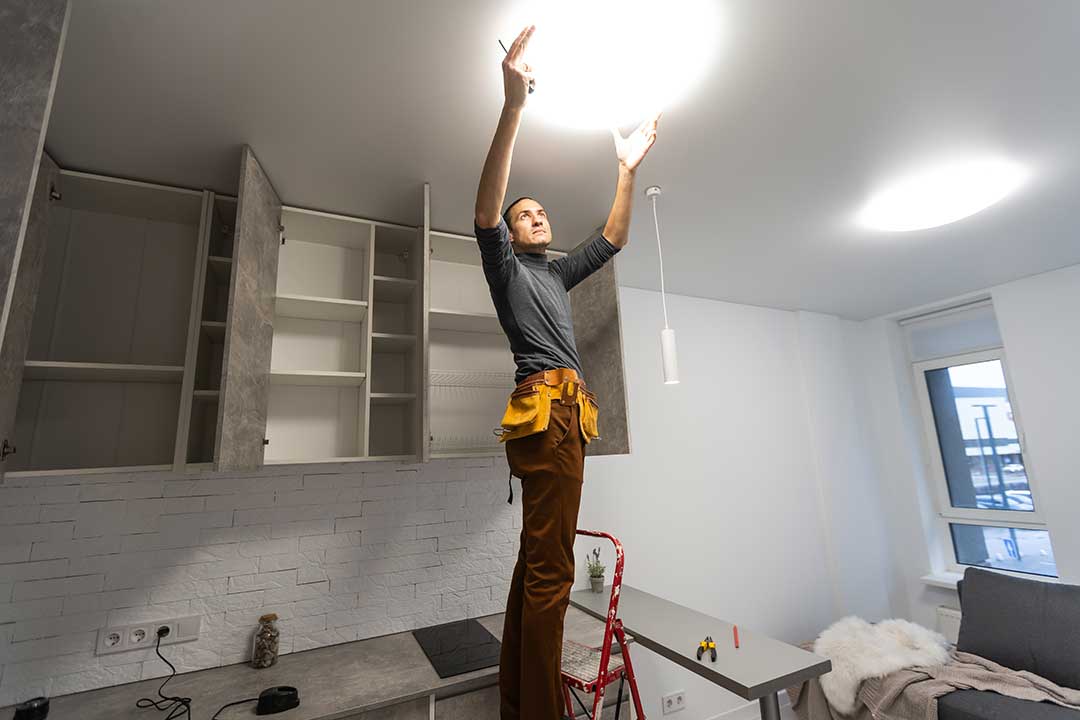
Check the existing bulb, fixture label, or owner’s manual before purchasing replacements. A bulb that physically fits may still be unsuitable if its shape blocks the fixture cover or places light in the wrong direction.
Are LED bulbs safe in enclosed fixtures?
Only use an LED bulb in a fully enclosed fixture if the packaging specifically states that it is rated for enclosed fixtures. Heat is the main concern. Although LEDs generally produce less heat than incandescent bulbs, their electronic components can still be damaged when heat cannot escape.
An unsuitable bulb may have a shortened life, become excessively hot, or fail prematurely. Enclosed fixtures are common in bedrooms, hallways, bathrooms, and outdoor areas, so the fixture’s design should be considered before selecting a bulb.
Outdoor fixtures require additional care. Use bulbs rated for the fixture’s location and exposure conditions. A covered exterior fixture is different from an open fixture exposed to rain, humidity, or temperature changes.
In Knoxville, seasonal humidity, warm summers, and frequent use of covered outdoor lighting can make fixture ventilation and weather suitability especially relevant. Bulbs should not be installed where moisture can enter the socket or fixture.
What does “daylight” mean, and is it always better?
“Daylight” generally refers to a cooler color temperature, often near 5,000K. It does not necessarily mean the bulb produces more light. A 5,000K bulb can have the same lumen output as a 2,700K bulb while appearing much bluer.
Daylight bulbs can be useful in workshops, craft areas, garages, and spaces where accurate visual detail matters. They may feel too stark in living rooms or bedrooms. The word “daylight” is a color description, not a brightness rating.
Also check the color rendering index, or CRI. A higher CRI generally means colors appear more accurately under the bulb. A CRI of 80 or higher is suitable for many household applications, while a higher rating can be helpful in kitchens, dressing areas, art spaces, or rooms where color distinction matters.
Do LED bulbs work in older homes?
LED bulbs can work well in older homes, but the condition of the fixture and wiring matters. Replacing a bulb does not correct loose sockets, damaged insulation, overloaded circuits, or unreliable switches.
Older homes may also have fixtures with limited ventilation, unusual sockets, or dimmers that are not compatible with LED technology. If a bulb burns out repeatedly, flickers, feels unusually hot, or shows discoloration around the socket, the issue may involve the fixture or circuit rather than the bulb.
Avoid exceeding the fixture’s maximum wattage rating. LED bulbs use fewer watts, but the fixture rating still provides an important safety limit. For example, a fixture marked for a maximum of 60 watts should not be treated as unrestricted simply because an LED bulb uses only 10 watts.
What should be checked before replacing a bulb?
Before installing a new LED bulb:
- Turn off the light and allow a hot bulb to cool.
- Read the fixture’s maximum wattage and bulb-type requirements.
- Match the bulb base and physical shape.
- Confirm whether the fixture is enclosed, damp-rated, or used outdoors.
- Select a compatible dimmable bulb if a dimmer is installed.
- Compare lumens, color temperature, and CRI rather than relying only on wattage.
- Dispose of broken bulbs carefully and follow local waste guidance.
Never force a bulb into a socket, use a bulb with a damaged base, or continue using a fixture that sparks, smells burnt, or becomes unusually hot. Those symptoms can indicate an electrical problem that requires attention beyond changing the bulb.
For most household rooms, a practical starting point is a medium-base LED bulb in the 800-lumen range, with a 2,700K to 3,000K color temperature and a shape suited to the fixture. From there, brightness and color can be adjusted based on the room’s purpose, natural light, and personal comfort.